In Short
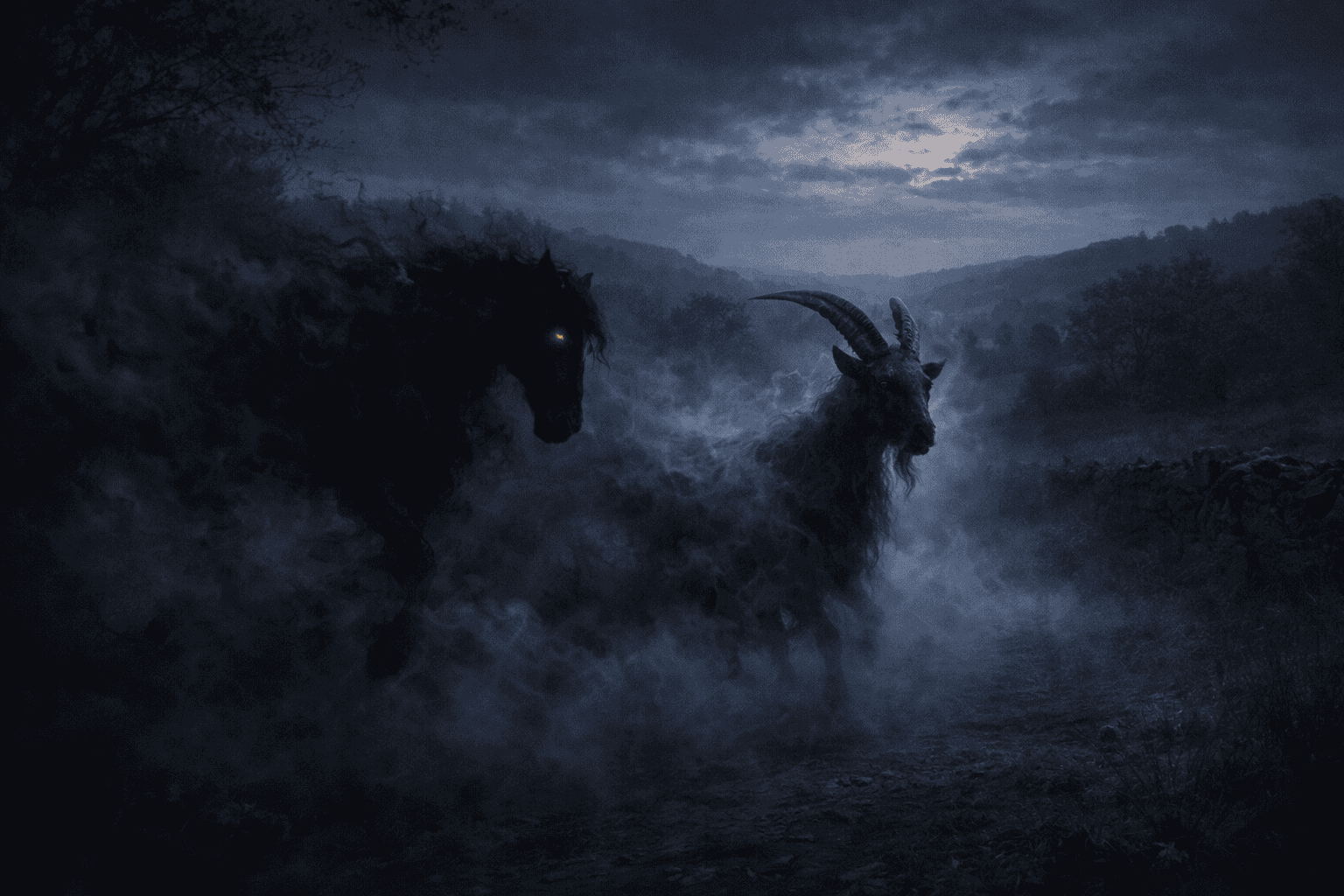
Yes. Shapeshifting is the púca‘s defining power. Its favorite form is a dark horse that carries unlucky travelers on a wild night ride, but W. B. Yeats recorded that it could also appear as a donkey, a bull, a goat, or an eagle, and other accounts describe it as a small, wizened man. Whatever shape it takes, it can usually speak, and it is never quite what it seems. Irish folklore never gave it a fixed list of forms: the point of the púca is that you cannot be sure what you are looking at.
| Short answer | Yes; changing shape is its defining trait |
|---|---|
| Favorite form | A dark horse with a wild mane and burning eyes |
| Other forms | Donkey, bull, goat, eagle, a small dark man |
| Can it speak? | Yes, in any form |
| Earliest list of forms | W. B. Yeats, 1888 |
| Stories to read | “The Piper and the Púca”; “The Kildare Pooka” |
| Common mix-up | Puck Fair’s goat, named from poc, “he-goat,” not from púca |
A Spirit Without a Fixed Shape
Most figures in Irish folklore have a recognizable look. The banshee is a woman, often combing her hair. The dullahan is a headless rider. The leprechaun is a small shoemaker. The púca (pronounced POO-kuh) is different. It has no single body, and the stories never agree on exactly what it looks like, because it looks like whatever it chooses to be that night.
That is not a vague idea added by modern writers. It runs through the old collections. The púca is always an animal that is not really an animal, and the stories depend on the moment when a traveler realizes it.
The Púca’s Forms in the Old Accounts
When W. B. Yeats gathered Irish folklore for his 1888 collection Fairy and Folk Tales of the Irish Peasantry, he described the púca as an animal spirit and named the shapes it was known to take: a horse, a donkey, a bull, a goat, and an eagle. Other sources add a human shape. The forms are worth taking one by one.
The Horse
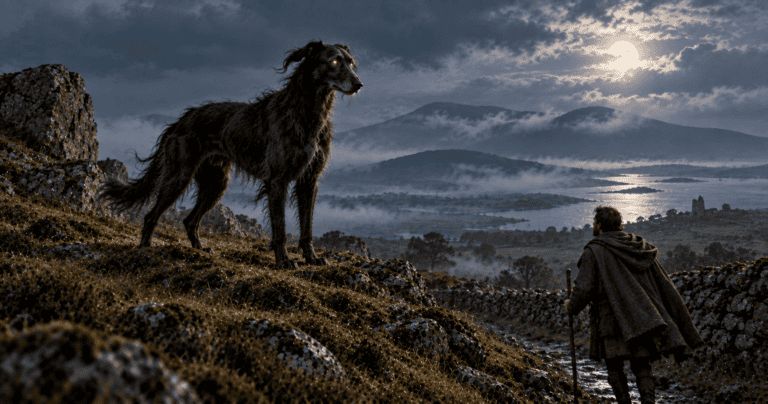
The horse is the classic púca. It stands by a lonely road at night, dark and sleek, with no saddle and no owner, as though it has been waiting. Once someone is on its back, it gallops across bogs and ditches, over hedges and along cliff edges, before throwing the rider off at dawn. Most púca stories use this shape, because it makes possible the púca’s signature trick: the ride.
The Donkey
In “The Kildare Pooka,” published by Patrick Kennedy in 1866, a púca in the shape of a donkey secretly cleans the kitchen of a big house every night. It is the gentlest púca story, and the donkey shape suits it: humble and hardworking, not wild.
The Bull and the Goat
In “The Piper and the Púca,” which Douglas Hyde translated from Irish and Yeats published in 1888, the púca that carries off a drunken piper has long horns, and the piper clings to them for dear life as it races across the country. Horned púcaí, bull-like or goat-like, appear in other local accounts too.
The Eagle
Yeats included the eagle among the púca’s forms. It is rarer, but it fits the púca’s habit of carrying people off, this time through the air instead of across the bog.
The Little Man
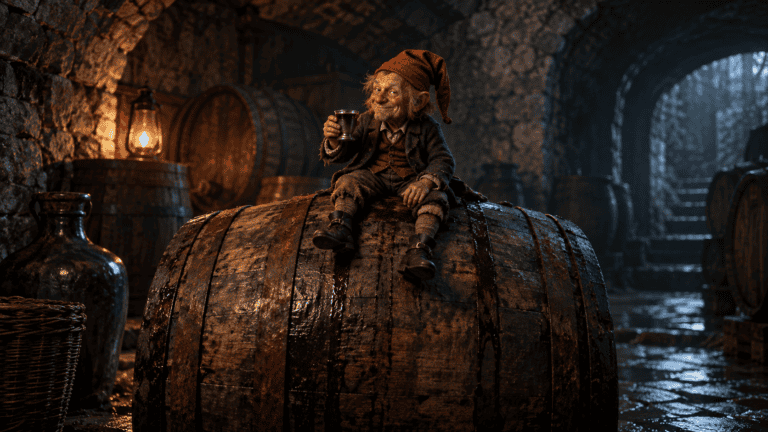
Some accounts give the púca a human shape, usually a small, dark, wizened man. In this form, it is harder to spot, since nothing about it immediately announces the supernatural.
A Púca That Talks
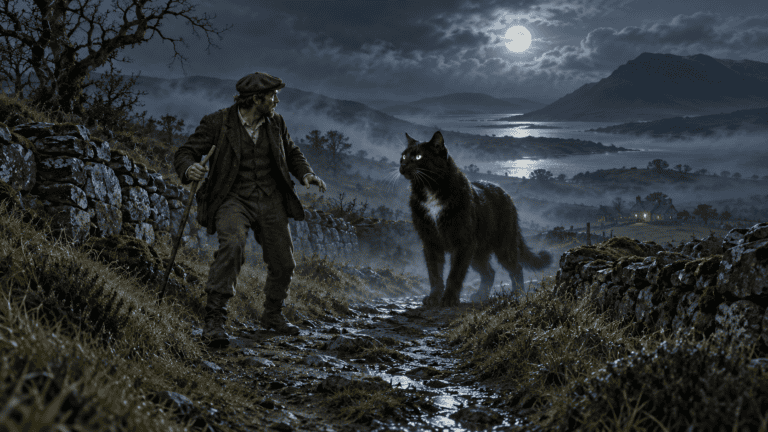
Whatever its shape, the púca can usually speak. In the Kildare story, the donkey explains to the astonished kitchen boy that it was once a lazy servant in the house and is now working off its idleness as a penance. In the piper’s story, the púca talks to its rider as it carries him along. A horse or a donkey that suddenly speaks is one of the clearest signs, in Irish folklore, that you are dealing with something from the other side.
Why Shapeshifting Matters to the Púca
The púca’s changing shape is what makes it both dangerous and funny. Its victims are almost always people who assume they know what they are looking at: a drunk man who thinks a stray horse will carry him home, or a household that thinks its kitchen is cleaning itself. The púca turns an ordinary animal, the kind every farmer knew, into something strange. It is a trickster that works through appearances, not words.
That is also why the púca is so hard to guard against. A banshee or a dullahan announces itself. A púca may look exactly like a neighbor’s horse.
What the Púca Is Not
A few popular ideas about the púca’s shapes do not come from Irish tradition.
- The goat of Puck Fair. Every August in Killorglin, County Kerry, a wild goat is crowned King Puck. The name comes from the Irish poc, “he-goat,” not from púca, though the two are often confused.
- The hare. Irish folklore is full of shapeshifting hares, but they are usually witches who take hare form to steal milk from their neighbors’ cows, not púcaí.
- The rabbit. The giant invisible rabbit of Mary Chase’s 1944 play Harvey, filmed with James Stewart in 1950, is called a pooka, but the rabbit is an American invention.
Other Shapeshifters of Irish Tradition
The púca is not the only shapeshifter in Irish folklore and mythology. The Morrígan appears to Cú Chulainn in the Táin as an eel, a wolf, and a heifer, and often takes the shape of a crow. Sadhbh, the mother of Oisín, was turned into a deer. The Children of Lir were changed into swans by their stepmother. But these are gods, heroes, and victims of enchantment. The púca is the one being in Irish folk belief whose whole nature is to change shape at will.
Does the Púca Have a True Form?
The old stories never say. Some modern writers describe a “true form” behind the disguises, but Irish tradition does not. The púca is simply whatever it appears to be at the moment, which is exactly why it cannot be trusted.
Sources and Further Reading
- Patrick Kennedy, Legendary Fictions of the Irish Celts, Macmillan (1866).
- W. B. Yeats, ed., Fairy and Folk Tales of the Irish Peasantry, Walter Scott (1888).
- Douglas Hyde, “The Piper and the Púca,” in Yeats, ed., Fairy and Folk Tales of the Irish Peasantry (1888).
- Katharine Briggs, An Encyclopedia of Fairies, Pantheon Books (1976).
- Dáithí Ó hÓgáin, Myth, Legend and Romance: An Encyclopaedia of the Irish Folk Tradition, Ryan Publishing (1990).