In Short
Irish fairies are not the tiny winged creatures of modern picture books. In Irish tradition, they are the Aos Sí, a powerful hidden people who live inside the hills and ancient forts, often human-sized, beautiful, and dangerous to offend. People called them by polite names like the Good People, avoided their places, and guarded their homes and children against them. They were neither good nor evil, but a neighbor to be respected, and a whole body of custom grew up around staying on their right side.
| Irish name | Aos Sí, “the people of the mounds” |
|---|---|
| Polite names | The Good People (na daoine maithe), the Gentry, the Other Crowd |
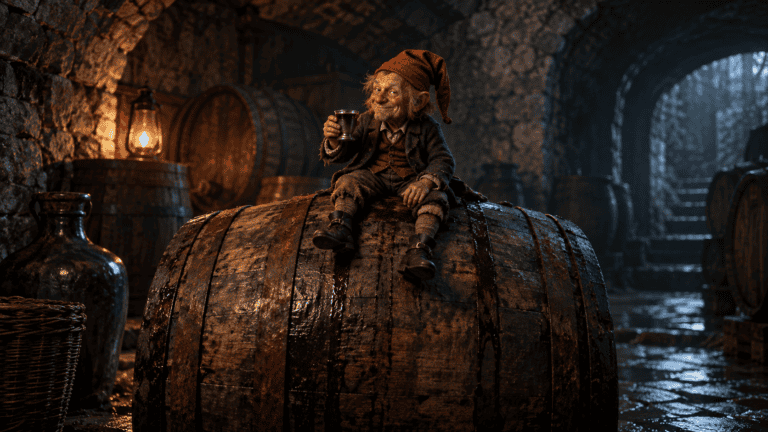
| Size | Often human-sized; a few kinds, like the leprechaun, are small |
| Where they live | Hills, mounds, fairy forts, lakes, and the sea |
| Two kinds | Trooping fairies, who live in communities, and solitary fairies |
| Origin stories | The Tuatha Dé Danann; fallen angels; sometimes the dead |
| Busiest nights | May Eve and November Eve (Bealtaine and Samhain) |
| Protection | Iron, salt, fire, holy water, and good manners |
What Are Irish Fairies?
Ask most people to picture a fairy, and they will imagine something small and sweet: a girl with gauzy wings, perhaps, sitting on a flower. Ask an Irish farmer of a hundred years ago, and you would get a very different answer, and probably a nervous glance over the shoulder. The fairies, he might tell you, are tall and handsome, dressed finer than any lord. They live inside the old forts and hills. They ride out at night in great hosts, and they take what they want: butter from the churn, a healthy child from the cradle, a young bride on her wedding night. It is best not to talk about them too much, and never to call them fairies when they might be listening.
That is the Irish fairy: not a figure of fantasy, but part of a belief system that shaped how people farmed, built their houses, raised their children, and understood illness and death, well into the twentieth century.
The Good People: Why Nobody Called Them Fairies
In Irish tradition, it was unwise to name the fairies directly, in case they took offense. People used polite, flattering names instead. The most common in Irish was na daoine maithe, “the Good People,” and in English they were the Gentry, the Other Crowd, the Wee Folk, or simply “them.” The older name, aos sí, means “the people of the sí,” the fairy mounds where they lived. The word survives in banshee, from bean sí, “woman of the fairy mound.”
Where Did the Irish Fairies Come From?
Irish people gave several answers to this question, and they did not always agree.
The oldest answer links the fairies to the Tuatha Dé Danann, the divine race of Irish mythology. When the ancestors of the Irish, the sons of Míl, conquered Ireland, the Tuatha Dé withdrew into the hills and mounds and became the hidden people of the sí. This idea is very old. In the seventh century, the churchman Tírechán already told of two royal sisters who took Saint Patrick and his companions for men of the síd, or gods of the earth.
A second, Christian answer was just as popular in the countryside. W. B. Yeats recorded it in 1888: the fairies were said to be “fallen angels who were not good enough to be saved, nor bad enough to be lost.” When Lucifer rebelled and was thrown out of heaven, the angels who had wavered fell to earth instead of hell, and became the fairies. Some people also believed that certain fairies were the dead, or that the recently dead could be found among the fairy host.
Trooping Fairies and Solitary Fairies
Yeats divided the fairies of Irish folklore into two broad groups, and folklorists still find the distinction useful. Our guide to the types of Irish fairies describes each kind in more detail.
- The trooping fairies lived together in communities inside the forts and mounds. They held feasts, played music, danced, hurled, and rode out in great processions, especially on May Eve and November Eve. The Aos Sí proper are trooping fairies.
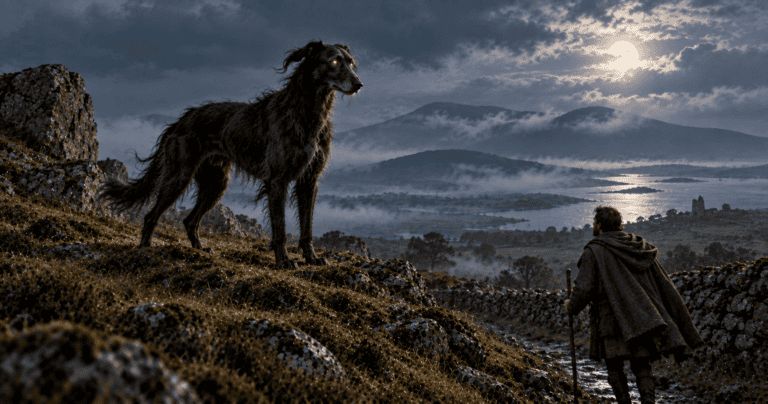
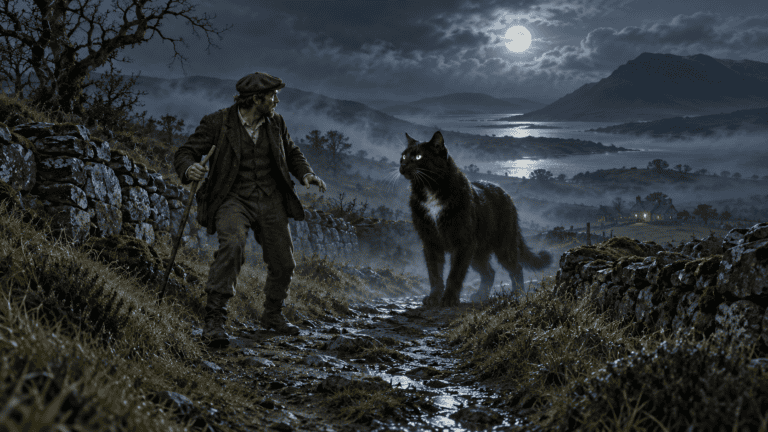
- The solitary fairies lived and worked alone, and were often stranger and more dangerous. They include the banshee, who keens for the dying; the púca, the shapeshifting night horse; the leprechaun, the fairy shoemaker; the far darrig, or red man, a gruesome prankster; and the dullahan, the headless rider.
Where Irish Fairies Live
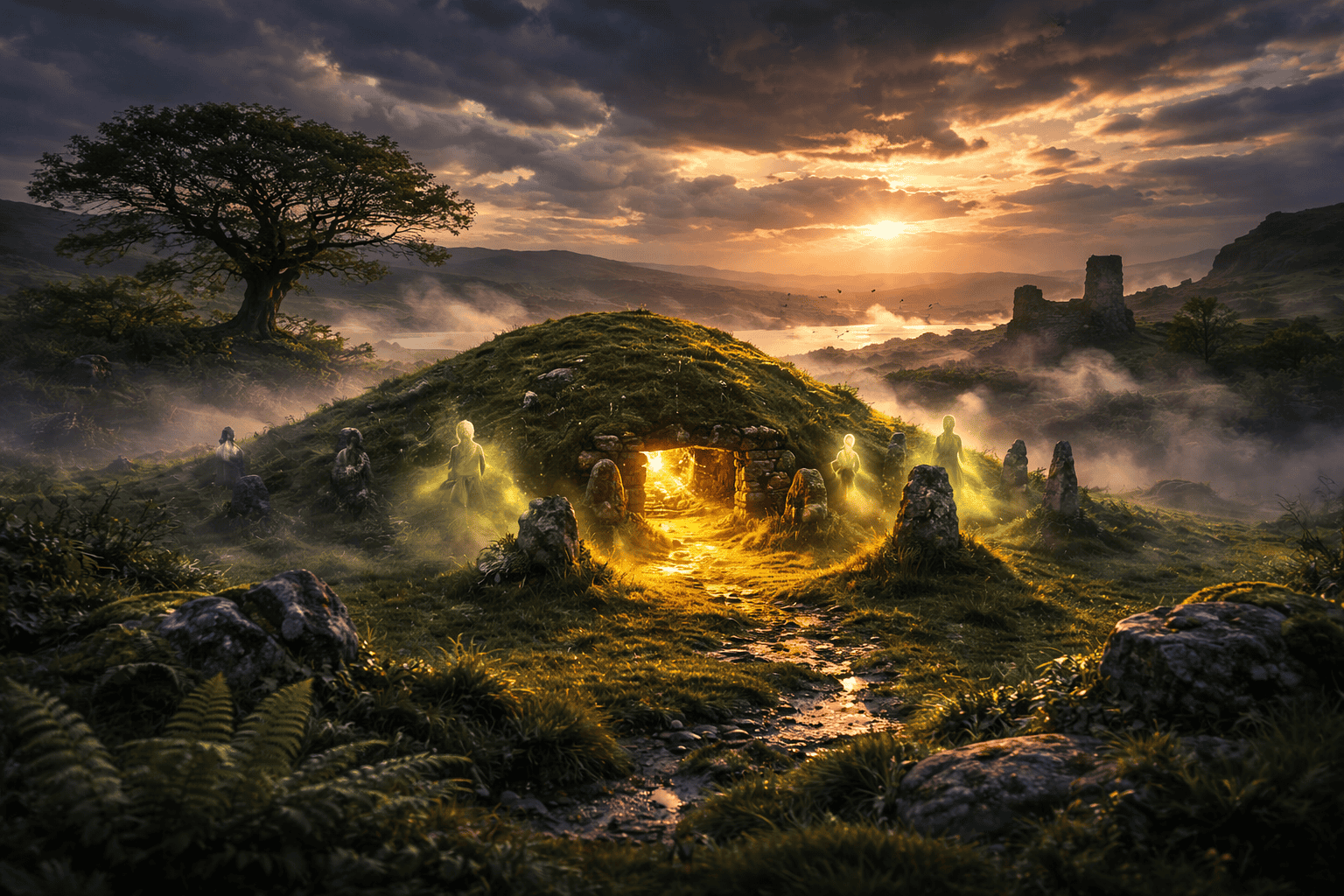
The fairies were tied to real places in the landscape. Their homes were the ancient mounds and cairns, the thousands of fairy forts scattered across the countryside, lone hills, and certain lakes and islands. The sea had its own fairy people, the merrows. Between their homes ran invisible fairy paths, and lone thorn trees, the fairy trees, marked their gathering places. People who knew where these places were left them strictly alone.
What the Fairies Did
Much Irish fairy lore is about what the fairies took. They were believed to steal the goodness out of milk and butter, and to take cattle, crops, and even people. A healthy child might be carried off and replaced by a sickly changeling. A young mother might be taken to nurse fairy children, and a skilled musician to play at fairy feasts.
The fairies could also cause sudden illness, a sharp pain, or a paralyzing stroke, and a sudden whirlwind on a still day was said to be the fairy host passing by. Yet they could reward people too. A kind act, like sharing food with a stranger or leaving clean water out at night, might be repaid with good luck, and some of the finest Irish tunes were said to have been learned from fairy musicians.
Are Irish Fairies Good or Evil?
Neither. The Irish fairies were not demons, but they were not friendly either. They had their own laws, their own pride, and a long memory for insults. Treated with respect, they might leave you alone or even help you. Crossed, whether by damaging their fort, spying on them, or boasting about them, they could be ruthless. The best way to think of them is as powerful, touchy neighbors.
How People Protected Themselves
Irish tradition had a whole set of customs for living alongside the fairies:
- Iron. Fairies were thought to hate iron, so a pair of tongs might be laid across a cradle, or a horseshoe nailed over the door.
- Salt, fire, and holy water were all used to protect a house, and especially a new baby.
- Warnings. Before throwing water out of the door at night, people called out a warning so as not to drench any fairy passing by.
- Good manners. Speaking well of the Good People, never boasting of good luck, and leaving milk or clean water out for them.
- Leaving their places alone. Never cutting a fairy thorn, ploughing a fort, or building across a fairy path.
When something went wrong, people might go to a fairy doctor, a local healer believed to understand the fairies and how to undo their harm. The most famous was Biddy Early of County Clare, who died in 1874 and whose reputation still lives on.
How Irish Fairies Became Tiny
The small, winged fairy of modern picture books grew mostly out of English literature and Victorian art. Shakespeare’s tiny fairies in A Midsummer Night’s Dream, Victorian fairy painting, and later illustrated children’s books gradually shrank the fairies and made them sweet. Films and toys finished the job. Irish tradition had a few small beings, like the leprechaun, but the Aos Sí themselves were remembered as tall, beautiful, and formidable, and much closer to the elves of Tolkien than to Tinker Bell.
Do Irish People Still Believe in Fairies?
Few would say so outright, but many still act as if it is wise to be careful. Farmers plough around fairy forts, road builders have changed routes to spare a fairy tree, and a surprising number of people would rather not cut a lone hawthorn. For some it is real belief, for others respect for tradition, and for many a mixture of both.
Sources and Further Reading
- W. B. Yeats, ed., Fairy and Folk Tales of the Irish Peasantry, Walter Scott (1888).
- Lady Augusta Gregory, Visions and Beliefs in the West of Ireland, G. P. Putnam’s Sons (1920).
- Katharine Briggs, An Encyclopedia of Fairies, Pantheon Books (1976).
- Dáithí Ó hÓgáin, Myth, Legend and Romance: An Encyclopaedia of the Irish Folk Tradition, Ryan Publishing (1990).
- Eddie Lenihan and Carolyn Eve Green, Meeting the Other Crowd: The Fairy Stories of Hidden Ireland, Tarcher (2004).