QUICK SUMMARY
The púca is a supernatural trickster in Irish folklore known for shapeshifting, mischief, and unpredictability. It can appear in many forms, especially as an animal, and is neither fully good nor evil. Instead, it represents uncertainty, disruption, and the uneasy feeling that the world does not always behave as humans expect.
What Is the Púca?
The púca is one of the most distinctive figures in Irish folklore, a supernatural being associated with shapeshifting, confusion, and the sudden collapse of ordinary expectations. It is often described as a trickster spirit, but that phrase only captures part of what makes it so memorable. The púca is not just mischievous. It is a force of disruption, a presence that reminds people they do not fully control the world around them.
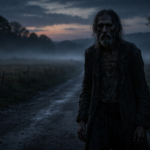
In some stories, the púca appears as a dark horse with wild eyes and unnatural speed. In others, it takes the form of a goat, dog, hare, or even a human-like figure. What unites these appearances is not a single shape, but a single quality: instability. The púca rarely appears in a way that feels safe, fixed, or fully trustworthy.
That is why it holds such an important place in Irish folklore. It gives form to uncertainty itself.
The Meaning of the Púca
At the simplest level, the púca represents unpredictability. It is the spirit of wrong turns, unsettling encounters, disrupted plans, and strange moments that seem to bend reality just enough to leave a person uneasy. In a tradition full of warnings, omens, and boundaries, the púca stands out as a figure that actively interferes.
This does not mean it is purely evil. Like many beings in Irish folklore, the púca exists outside simple human morality. It may frighten, confuse, mislead, or mock, but it is not a straightforward villain. In some accounts, it even offers advice or delivers warnings, though these are often mixed with confusion or threat.
That ambiguity matters. The púca is not there to teach a clean moral lesson. It represents the fact that the world contains forces that can interrupt human plans without explanation.
Where the Name Comes From
The word púca has deep roots in Irish and broader Celtic tradition, and it appears in related forms across other languages and folk traditions. In Ireland, however, the púca has developed a very specific identity as a supernatural shapeshifter tied to the landscape and to certain times of year.
Its name has become so embedded in folklore that it now carries an entire atmosphere with it. To say “púca” is not merely to name a creature. It is to evoke darkness, movement, uncertainty, and the possibility that what stands before you may not be what it seems.
That quality of instability is central to its identity from the beginning.
The Púca as a Shapeshifter
One of the púca’s defining traits is its ability to change form. This is not decorative mythology. It is essential to what the púca means. A being that can take many shapes cannot be easily understood, predicted, or controlled.
The púca is most often associated with animal forms, particularly those already charged with symbolic unease or wildness. Common appearances include:
- a black horse
- a goat
- a dog
- a hare
- a strange human-like figure
These forms are not random. They are close enough to the natural world to feel possible, but strange enough to suggest that something is off. The púca often appears at the edge of recognition, where familiarity begins to slip into something more disturbing.
That is what gives the shapeshifting its power. It turns the ordinary into something unstable.
The Púca and the Irish Landscape
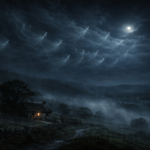
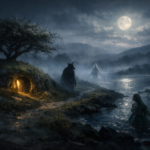
Like many beings in Irish folklore, the púca is closely tied to place. It does not belong to abstract fantasy. It belongs to roads, fields, hills, lonely paths, and places where people are slightly removed from the safety of community. It tends to appear in landscapes that already feel transitional, exposed, or uncertain.
This is important because the púca is not just a creature one meets. It is a figure one encounters in a particular kind of world: rural, open, dimly lit, and only partly human in its emotional texture. The farther a person moves from settled domestic space, the more possible the púca becomes.
That connection to place helps explain why the púca feels so rooted in Irish folklore. It is not merely a story element. It is woven into the atmosphere of the land itself.
What the Púca Does
The púca is best known for causing disruption. It may lead travelers astray, frighten them, mock them, or interfere in subtle ways that leave them shaken and disoriented. In some stories, it offers a ride that quickly becomes a terrifying loss of control. In others, it appears only briefly, altering the mood of a place and leaving behind a sense that something unnatural has passed through.
Its actions often include:
- misleading travelers
- changing direction unexpectedly
- creating confusion
- disrupting routines
- turning confidence into vulnerability
What makes these stories effective is that the púca does not always attack directly. It unsettles. It interrupts. It reminds people that certainty can vanish quickly.
That kind of fear is often more durable than violence.
Is the Púca Good or Evil?
Like the Aos Sí more broadly, the púca does not fit neatly into human categories of good and evil. It can be dangerous, but it is not always destructive. It may frighten someone without harming them, or mislead them without lasting damage. In some traditions, it is even capable of speaking wisely or offering insight, though never in a way that fully removes its menace.
This makes the púca more interesting than a simple villain. It is not evil in the moralized sense. It is untamed. It reflects a world in which some forces are not organized around human comfort, fairness, or logic. That makes it harder to classify, but much more powerful as folklore.
The better question is not whether the púca is good or evil. It is whether a person can ever feel safe in the presence of something so fundamentally unpredictable.
The answer is usually no.
The Púca and Seasonal Tradition
In Irish tradition, the púca is often associated with seasonal change, especially the period around Samhain. This connection makes sense, since Samhain is one of the times when the boundary between worlds is thought to grow thinner. It is a season of transition, vulnerability, and heightened supernatural possibility.
During this period, the púca is sometimes believed to influence crops, fields, and outdoor spaces. Certain harvest practices and local beliefs reflect the idea that the púca’s presence must be acknowledged rather than ignored. In some traditions, a portion of the harvest was left unpicked or set aside, partly out of respect for supernatural forces linked to the land.
This seasonal dimension adds depth to the figure. The púca is not only a wandering trickster. It is also tied to the rhythms of the year and to moments when ordinary boundaries weaken.
Stories of Riding the Púca
One of the most famous motifs in púca lore is the forced ride. A person encounters what seems to be an ordinary horse, only to discover too late that it is anything but ordinary. Once mounted, the rider loses all control. The púca carries them at terrifying speed across fields, through bogs, over walls, or into places they would never willingly go.
This image is effective because it combines several fears at once. There is the fear of misrecognition, the fear of lost control, and the fear of being taken somewhere beyond one’s understanding. The ride is not always fatal, but it is almost always humiliating, frightening, or transformative.
It turns a familiar act into a nightmare. That is classic púca territory.
The Púca in Comparison to Other Irish Spirits
The púca differs from other well-known figures in Irish folklore because its role is not tied to one specific event or function. The banshee announces death. The Dullahan is closely associated with death’s arrival. The púca, by contrast, specializes in instability itself.
That gives it unusual freedom in folklore. It can move between tones and settings more easily than many other beings. It can be eerie, mocking, violent, absurd, or oddly instructive depending on the story. This flexibility is one reason it has endured so strongly. It reflects a wider range of human unease.
It is also why the púca often feels more alive than more narrowly defined figures. It resists simplification.
Why the Púca Still Resonates
The púca continues to resonate because it embodies a feeling people still recognize. Even in a modern world, there remains a deep discomfort around loss of control, misdirection, and the sense that appearances can shift without warning. The púca gives that discomfort a face, or rather, several faces.
It also survives because it is entertaining. Let’s not pretend humans only keep stories for noble cultural reasons. The púca is memorable because it is vivid, flexible, and unsettling in ways that invite retelling. It can frighten without becoming repetitive, and it can amuse without becoming harmless.
That balance keeps it alive.
Modern Misunderstandings of the Púca
Modern fantasy sometimes reduces the púca to a quirky magical creature or a playful trickster with no real edge. That weakens the figure considerably. In traditional folklore, the púca is not cute, and it is not there to provide comic relief. Even when it behaves mischievously, there is danger behind the mischief.
The púca belongs to a tradition where the supernatural is close to the everyday world, but not safely absorbed into it. It represents a breach in expectation, not a charming addition to it. When that danger is stripped away, the figure loses much of what makes it meaningful.
This is a common problem with folklore in general. Modern retellings often preserve the silhouette while draining away the tension.
Final Thoughts
The púca is one of the most compelling beings in Irish folklore because it captures something that many other supernatural figures only touch indirectly: the instability of reality when human certainty begins to fail. It is a shapeshifter, a trickster, and a disturber of order, but more than that, it is a reminder that the world is not always as knowable as people would like it to be.
That is why the púca matters. It is not merely a strange creature from old stories. It is part of a larger tradition in which the land is alive, the unseen world is near, and the safest path is not always the one that looks most familiar.