In Short
Irish folklore has many kinds of fairy, and they fall into two broad groups. The trooping fairies, the Aos Sí, live together in the hills and forts and ride out in hosts. The solitary fairies live and work alone, and include the banshee, the púca, the leprechaun, the dullahan, the far darrig, and the leanan sí. There are also water beings, like the merrow, and spirits of hunger and the dead. This guide describes each one, where the stories come from, and which popular “Irish fairies” are modern inventions.
| Two groups | Trooping fairies and solitary fairies |
|---|---|
| Trooping fairies | The Aos Sí, living in communities in the forts and mounds |
| Omens of death | The banshee and the dullahan |
| Tricksters | The púca, the far darrig, the leprechaun, the clurichaun |
| Lovers | The leanan sí and the gancanagh |
| Water beings | The merrow |
| Others | The changeling, the fear gorta, the fairy host |
| Main sources | Croker (1825), Lady Wilde (1887), Yeats (1888), the Schools’ Collection |
How Irish Fairies Are Grouped
Irish storytellers never made a tidy list of fairy types. The names, looks, and habits of the fairies varied from county to county, and sometimes from one storyteller to the next. The most useful way of sorting them comes from W. B. Yeats, who in 1888 divided the Irish fairies into two broad groups: the trooping fairies, who live together, and the solitary fairies, who live alone. Folklorists still use that division today, and it is the one followed here.
The Trooping Fairies
The trooping fairies are the fairy people proper. They live together in communities under the hills and forts, with their own rulers, feasts, and quarrels, and they travel in groups. Most of the lore about fairy forts, fairy paths, and fairy music is about them.
The Aos Sí
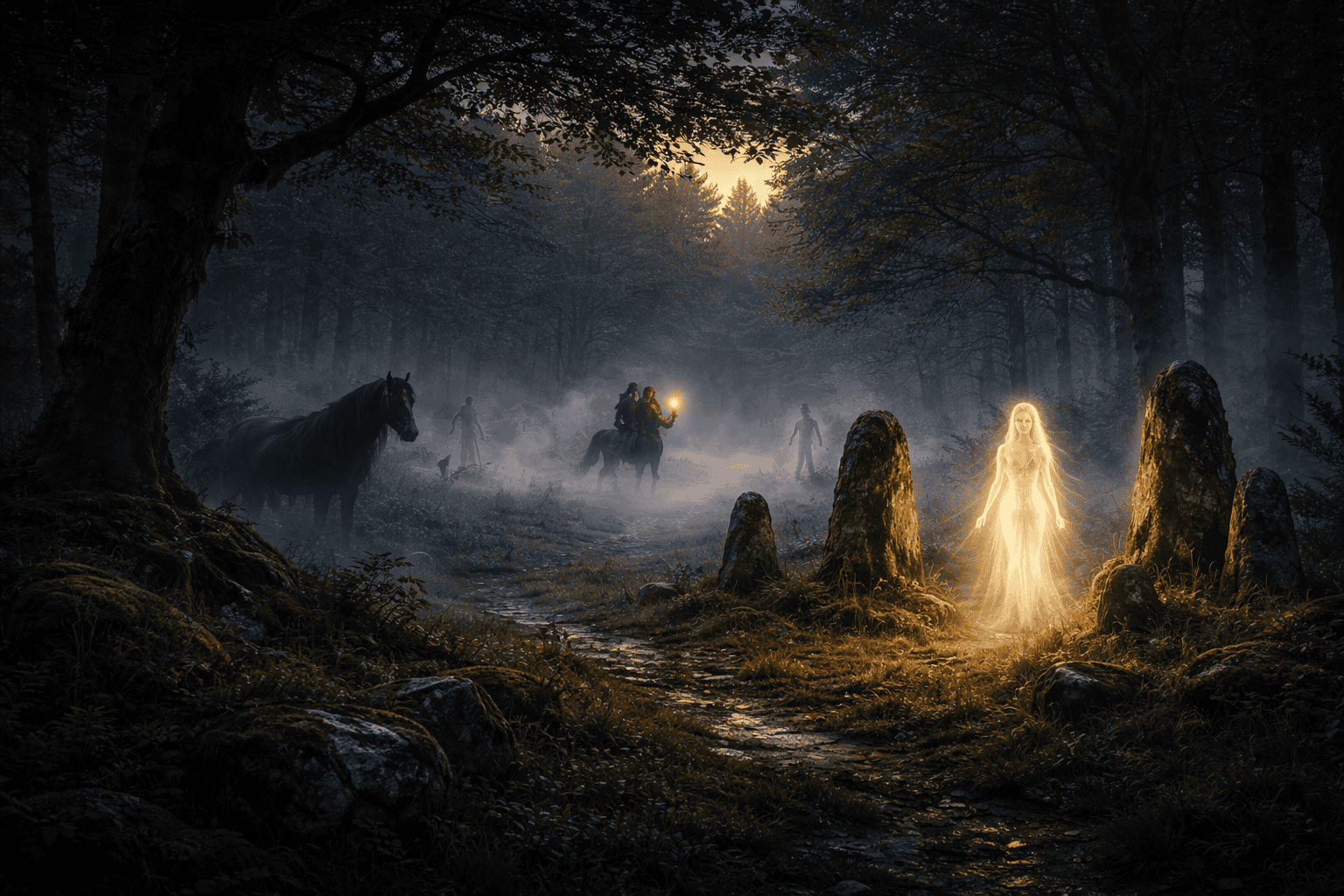
The Aos Sí (pronounced ees shee), “the people of the mounds,” are the fairies proper: a hidden people living in communities inside the hills, cairns, and fairy forts. They are usually imagined as human-sized, beautiful, and richly dressed. They feast, make music, play hurling, and ride out in great processions, especially on May Eve and November Eve. Tradition links them to the Tuatha Dé Danann, the divine race of Irish mythology, who withdrew into the mounds when the ancestors of the Irish took the land. People called them the Good People and were careful never to offend them.
The Fairy Host
When the Aos Sí traveled, they went as a host, the slua sí. A sudden whirlwind on a calm day was said to be the host passing by, and people would bless themselves or throw dust after it. In the Scottish Highlands and Islands, a related belief described the sluagh, a host of the restless dead flying through the air at night.
The Solitary Fairies
The solitary fairies keep to themselves. Each has its own work or its own fate to deliver, and many are tied to a single family, trade, or kind of place. Yeats noted that they tend to be gloomier and more dangerous than the trooping fairies, and several of Ireland’s most famous creatures belong here.
The Banshee
The banshee (pronounced BAN-shee), from the Irish bean sí, “woman of the fairy mound,” is a fairy woman whose keening cry warns that someone in certain old Irish families is about to die. She does not cause the death, only announces it. She is usually seen as an old woman combing her long hair, or heard wailing outside the house at night.
The Dullahan
The dullahan (pronounced DULL-uh-han) is a headless rider on a black horse who carries his own head. When he stops at a house and calls a name, that person dies. He sometimes drives the cóiste bodhar, a silent death coach. The best-known account comes from Thomas Crofton Croker’s collection of 1825.
The Púca
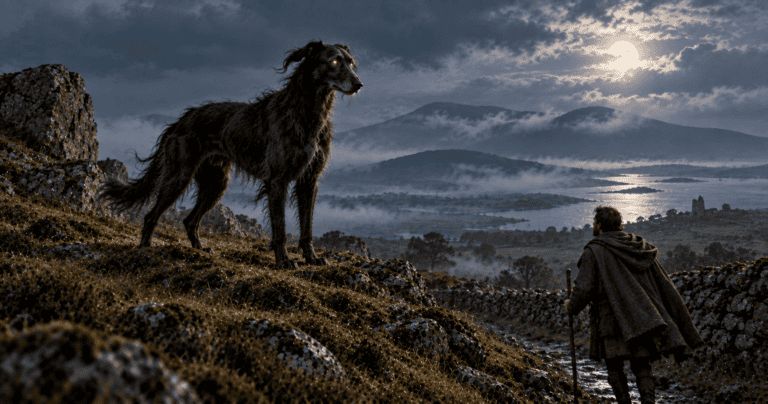
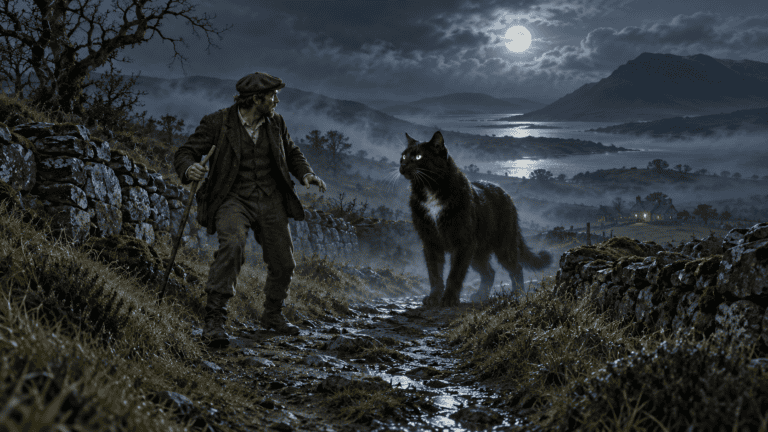
The púca (pronounced POO-kuh) is the great shapeshifter of Irish folklore, most often a sleek black horse that carries unwary travelers on a terrifying night ride. It can also appear as a goat, an eagle, or a man. It is linked to the end of the harvest, and after Samhain, it was said to spoil any blackberries left on the bushes.
The Leprechaun
The leprechaun is a small, solitary fairy shoemaker, usually heard before he is seen, tapping away at a single shoe. Catch him and keep your eyes on him, and he must lead you to his hidden gold, but he always finds a way to make you look away. The green-suited figure of St. Patrick’s Day cards is a much later invention. In older descriptions, he wore red.
The Clurichaun
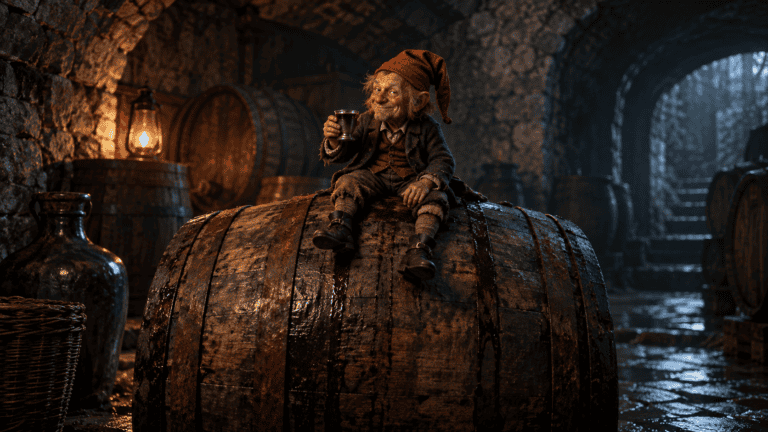
The clurichaun is the leprechaun’s disreputable cousin, and some storytellers thought he was simply a leprechaun on a night off. He haunts wine cellars and drinks the household dry, and if he is well treated, he may guard the cellar in return. Croker included him in his 1825 collection.
The Far Darrig
The far darrig, from the Irish fear dearg, “red man,” is a small fairy dressed in red with a taste for grim practical jokes. He might turn up at a house on a stormy night, ask to warm himself by the fire, and then play tricks on the family that range from the harmless to the horrible. It was best to be polite to him.
The Leanan Sí
The leanan sí (pronounced LAN-awn shee), “fairy lover,” is a fairy woman who takes a human lover, usually a poet or musician. She brings him inspiration, but she also drains his life away, and her lovers are said to be brilliant but short-lived. Yeats wrote that she was the muse of the Gaelic poets.
The Gancanagh
The gancanagh, from the Irish gean cánach, “love-talker,” is the male counterpart of the leanan sí: a handsome fairy who appears in lonely valleys, smoking a pipe, and makes young women fall hopelessly in love with him. Those he leaves behind are said to pine away.
The Fear Gorta
The fear gorta, “man of hunger,” is a thin, starving figure who wanders the roads in hard times, begging for food. Those who feed him are said to be rewarded with good luck. His stories carry the memory of Ireland’s famines.
Water Fairies
Ireland’s lakes, rivers, and coasts had their own supernatural inhabitants. The best known is the merrow of the sea, whose stories are told most often along the western and southern coasts.
The Merrow
The merrow, from the Irish murúch, is Ireland’s sea fairy. The women are beautiful, with fish tails, and wear a magical red cap that lets them travel between the sea and the land. If a man hides her cap, a merrow may marry him and live on shore, but if she finds it again, she returns to the sea, leaving her family behind. The male merrows are said to be ugly and good-natured. In Croker’s tale “The Soul Cages,” one keeps the souls of drowned sailors under lobster pots at the bottom of the sea.
Fairy Takings
Some of the most important fairy beliefs are not about a particular kind of fairy at all, but about what the fairies did to people. The most feared was that they could steal a person away and leave something else in their place.
The Changeling
The changeling is not so much a type of fairy as the result of a fairy theft: a fairy, or a bewitched log, left in the place of a stolen baby or young wife. It is one of the darkest parts of Irish fairy belief, because in the nineteenth century it led to real deaths.
Modern Inventions
Some creatures often listed as “Irish fairies” online have no roots in the traditional record. The best-known is the dearg-due, a beautiful female vampire said to rise from a grave in County Waterford. The earliest trace is a brief mention, in Dudley Wright’s early twentieth-century book Vampires and Vampirism, of a female vampire in a Waterford graveyard; when the vampire scholar Montague Summers went looking, he could not even find the landmark it named. The name dearg-due and the detailed tragic love story now told about her appear only in much later books and websites, so she is best treated as modern folklore rather than old tradition. Similarly, the vampire traits often given to the Abhartach are later additions to a genuine old legend.
Which Irish Fairy Is the Most Dangerous?
By reputation, the dullahan and the Aos Sí themselves. The dullahan’s arrival meant certain death, and the Aos Sí were the ones blamed for stealing children, spoiling crops, and striking people down with sudden illness. The banshee, by contrast, only warned of death, and the leprechaun was more likely to cheat you than harm you.
Sources and Further Reading
- Thomas Crofton Croker, Fairy Legends and Traditions of the South of Ireland, John Murray (1825).
- Lady Wilde, Ancient Legends, Mystic Charms, and Superstitions of Ireland, Ward and Downey (1887).
- W. B. Yeats, ed., Fairy and Folk Tales of the Irish Peasantry, Walter Scott (1888).
- Katharine Briggs, An Encyclopedia of Fairies, Pantheon Books (1976).
- Dáithí Ó hÓgáin, Myth, Legend and Romance: An Encyclopaedia of the Irish Folk Tradition, Ryan Publishing (1990).