QUICK SUMMARY
Irish folklore is filled with creatures that range from mischievous fairies to terrifying spirits of death and hunger. These beings reflect Ireland’s deep connection to the land, the supernatural, and the unseen forces believed to shape everyday life.
What Are Creatures and Beings in Irish Folklore?
Irish folklore does not separate the natural and supernatural as neatly as modern thinking tries to. Creatures and beings exist alongside people, sometimes hidden and sometimes alarmingly close. They are not simply monsters in the modern fantasy sense. They are spirits, omens, tricksters, guardians, and presences tied to particular places, fears, and traditions.
For much of Irish history, these beings were not treated as fiction. People adjusted their behavior because of them. They avoided certain places, respected old boundaries, and passed down warnings that shaped daily life.
The Different Types of Irish Folklore Creatures
Irish folklore contains a wide range of supernatural beings, but most of them fall into a few broad groups. Seeing them this way helps reveal what they meant to the people who told these stories.
The Aos Sí: The Fairy Folk
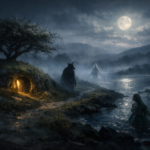
The Aos Sí are among the most important beings in Irish folklore. They are not delicate little fairies with wings. They are ancient, powerful, and deeply bound to the Irish landscape. They are often associated with fairy forts, burial mounds, hills, and lonely hawthorn trees, all of which carry an air of caution in traditional belief.
Stories about the Aos Sí are really stories about respect. People were expected not to interfere with their places, not to mock them, and not to assume the land belonged only to the visible world.
Spirits of Death and Warning
Some Irish beings are tied directly to death, mourning, and forewarning. The most famous is the Banshee, whose cry is said to signal that a death is near. Others, such as the Bean Nighe, appear in liminal places like riversides, carrying the eerie sense that fate has already begun its work.
These figures matter because they show how Irish folklore treated death: not as something random and silent, but as something that could announce itself through signs, sounds, and supernatural presence.
Tricksters and Dark Figures
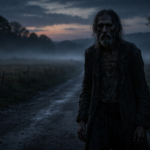
Other beings are more unpredictable. Figures like the Púca and the Far Darrig are known for deception, fear, and mischief. They unsettle rather than simply destroy. They lure travelers off the road, distort what is real, and remind people that not every encounter with the supernatural comes wrapped in grandeur or meaning.
In many ways, these beings reflect the instability of the world itself. A quiet road, an empty field, or a dark edge of woodland could quickly become a place where normal rules no longer held.
Spirits of Hunger and Suffering
Some creatures emerge from hardship rather than mystery alone. The Fear Gorta, often described as a starving figure begging for food, carries the deep shadow of famine and poverty. Unlike more distant supernatural beings, figures like this feel painfully close to human suffering.
That is part of what makes them powerful. They are not only eerie. They are moral. They test generosity, expose fear, and preserve memory of real pain through folklore.
Water and Sea Beings
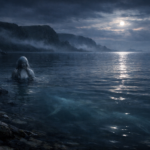
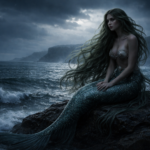
Ireland’s coast and waterways gave rise to beings shaped by the pull of the sea. Merrows and other water spirits often carry a mixture of beauty, distance, danger, and sorrow. They belong to the edge of things: between land and ocean, human life and otherworldly life, longing and loss.
These are some of the most haunting figures in Irish folklore because they are rarely just frightening. They are often melancholy, reflecting the emotional weight the sea has long carried in Irish imagination.
Why These Beings Matter
These creatures were never just decorative pieces of old storytelling. They helped explain the world. Strange events, sudden illness, death, bad luck, or uncanny places all became easier to understand when placed inside a supernatural framework.
They also protected the landscape in a practical way. Folklore taught people to leave certain mounds untouched, to avoid disturbing old trees, and to treat ancient places with care. In that sense, belief acted almost like an unwritten code of preservation.
Just as importantly, these beings gave shape to human fears. Hunger, grief, deception, isolation, and the nearness of death all appear again and again in Irish folklore, but they do not appear as abstractions. They arrive as figures with names, habits, voices, and places in the world.
How People Responded to Them
Irish folklore was not only about telling stories. It was also about behavior. People took precautions. They spoke carefully in certain places, avoided disturbing fairy paths, and showed respect to sites believed to belong to the unseen world. Even when belief softened over time, the habits often remained.
That lingering respect still survives in modern Ireland. Fairy forts are still spoken of carefully. Lone hawthorn trees are still sometimes left standing. Old warnings are still repeated, half seriously and half not, which is usually how powerful folklore survives into the present.
Key Beings Within This Category
This category can branch into many of the best-known figures in Irish folklore, including the Banshee, the Púca, the Fear Gorta, the Merrow, the Bean Nighe, and the Far Darrig. Each one opens onto a different side of Irish belief, whether that means death, mischief, hardship, warning, or the strangeness of the natural world.
As the category grows, this hub can also connect readers to lesser-known beings, giving the section more depth and helping the whole cluster feel authoritative rather than repetitive. Search engines, those tireless little bureaucrats, tend to like that.
Final Thoughts
Irish folklore creatures and beings are not just old inventions meant to entertain. They are part of a larger worldview in which the land is alive, the unseen is never far away, and human life is shaped by forces that cannot always be controlled or explained.
That is why these stories endure. They are eerie, memorable, and rich with atmosphere, but they also preserve something deeper: an Irish way of imagining the world as layered, haunted, and meaningful.