In Short
Wren Day, in Irish Lá an Dreoilín, is the folk custom of St. Stephen’s Day, December 26. Bands of “wren boys” in straw suits, masks, and old clothes once hunted a wren, tied it to a decorated holly bush or pole, and paraded it from house to house with music and a begging rhyme, collecting money for a night of dancing. The bird is no longer killed. The custom survives most strongly in Dingle, County Kerry, and in parts of Kerry, west Limerick, and elsewhere, often as a charity parade.
| Irish name | Lá an Dreoilín (Day of the Wren) |
|---|---|
| Date | December 26, St. Stephen’s Day |
| Participants | Wren boys, also called strawboys or mummers |
| Central object | A wren on a holly bush or decorated pole |
| Best-known venue | Dingle, County Kerry |
| Related customs | Isle of Man (Hunt the Wren), Wales (Hela’r Dryw) |
| Live bird killed today? | No; a replica or ribbons stand in |
| Official recognition | Ireland’s National Inventory of Intangible Cultural Heritage (2021) |
The Morning After Christmas
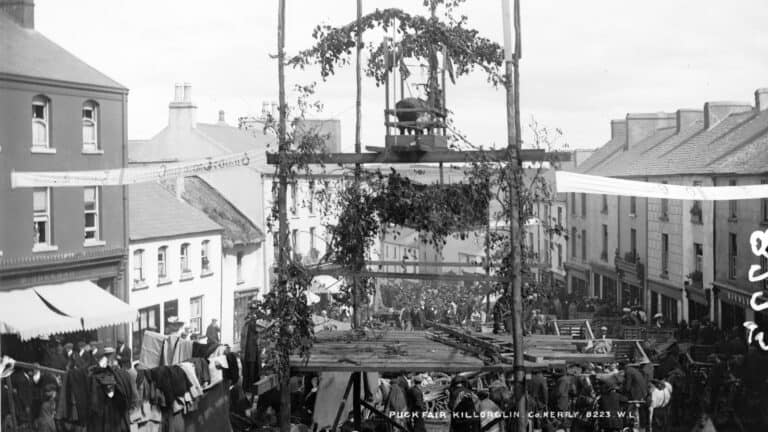
On the morning of December 26, in towns along the west coast of Ireland, the streets fill with figures that look as if they stepped out of a field. Their heads are hidden under tall conical masks of plaited straw, their bodies wrapped in straw skirts and capes, and they move behind fifes, tin whistles, melodeons, and the steady beat of the bodhrán. At their head, in older days, someone carried a holly bush hung with ribbons, and inside it was a small brown bird, freshly killed. These are the wren boys, and the day is Wren Day.
It is among the oddest survivals of the Irish calendar: a tiny songbird, hunted with sticks and stones once a year and carried in procession like a fallen king. Wherever people asked why, the tradition supplied an answer, and usually more than one.
What Happens on Wren Day
Wren Day falls on St. Stephen’s Day, the feast of the first Christian martyr, and in Ireland the two names have long been used for the same date. Many accounts of the Irish custom describe the same core elements: a hunted bird, a decorated bush or pole, and a house-to-house collection.
The Hunt and the Wren Bush
On the day itself, or in the days before, young men and boys beat the hedges and furze to flush out a wren, then brought it down with sticks or stones. The dead wren was fixed to a holly bush or a branch decorated with ribbons, colored paper, and sometimes ivy, or it was tied to the top of a staff carried in procession. In 1924, John J. Marshall described the Munster version in Popular Rhymes and Sayings of Ireland: groups of youths carried a holly bush “adorned with ribbons,” with one or more wrens hanging from it, from house to house.
Straw Suits, Masks, and Music
Disguise was essential. Wren boys wore masks of straw or animal skin, mismatched old clothes, or suits woven from oat straw. A traditional straw suit consists of a skirt, a cape, and head gear. In west Kerry, a hobby horse called the Láir Bhán (white mare) often led the group.
Collecting for the Wren
The purpose of the rounds was to collect money and food. At each house the wren boys sang or chanted their rhyme, danced a few steps, and asked for a contribution “to bury the wren.” The proceeds paid for the wren dance, sometimes called the wren ball, held that night or soon after in a house, a pub, or later a hotel. In some places the bird itself was formally buried at the end of the day.
The Wren Boys’ Rhyme
Every group had its verse, and the wording varied from parish to parish. The opening is among the best-known pieces of folk verse attached to the Irish Christmas season. Marshall printed this Munster version in 1924:
The wren, the wren, the king of all birds,
On St. Stephen’s day was caught in the furze,
Although he’s little his family’s great,
I pray you good landlady give us a treat.
Two details in these four lines explain a great deal. The bird is called “king of all birds,” which points to the legend of how the wren won that title. The bird is caught “in the furze,” the gorse that covers Irish hillsides, even though holly was the bush most groups actually carried. Many versions continue with further couplets asking for money, food, or drink.
Why Was the Wren Hunted?
Irish storytellers offered several explanations for the hunt. Each is a story told to justify the custom, not a historical record of how it began, and folklorists such as Christina Hole regarded these tales as later rationalizations of a ritual that was already old.
The Wren That Betrayed St. Stephen
The most common explanation ties the wren to the saint of the day. In this story, St. Stephen was hiding in a bush from his persecutors when a wren began to chatter and flap its wings, giving away his hiding place. He was captured and stoned to death, and the wren was hunted on his feast ever after as punishment.
The Wren on the Drum
A second story makes the wren a traitor to Ireland. Irish soldiers were creeping up on a sleeping enemy camp at night when a wren landed on a drum and began pecking at crumbs left on the drumhead. The tapping woke the drummer, who raised the alarm, and the Irish attack failed. In different versions the enemy is a Viking force, Cromwell’s army, or the Williamite army of the 1690s, which shows how the story attached itself to whichever invader a district remembered most bitterly.
How the Wren Became King of the Birds
The title in the rhyme comes from a fable found across Europe. The birds agreed that whichever of them could fly highest would be their king. The eagle soared above all the others, but a wren had hidden in its feathers, and when the eagle tired, the wren flew a little higher and claimed the crown. One version adds that the eagle then put a hex on the wren, so that it normally cannot fly higher than a bush.
St. Moling and the Wren
One smaller tradition offers a much older reason. A medieval Irish life of St. Moling says the saint cursed the wren for killing his pet fly, wishing that children would destroy it. The passage is sometimes read as a possible early hint of a wren hunt, although it does not describe the St. Stephen’s Day custom.
The Wren as Druid Bird
A popular claim holds that the Irish word for wren, dreoilín, comes from draoi éan, “druid bird.” The idea is old. Cormac’s Glossary, an Irish text of about 900 attributed to Cormac mac Cuilennáin, explains the Old Irish word drean as druí-én and calls the wren a bird of prophecy, and the medieval life of St. Moling calls it a “magus bird” because some people took omens from it. This is folk etymology, however, not linguistic fact. The Celtic scholar Whitley Stokes connected the Irish word with Welsh dryw, “wren,” as a shared inherited word, and modern linguists do not accept the “druid bird” derivation. The glossary does show that medieval Irish writers already linked the wren with augury.
The Custom Beyond Ireland
Ireland was never alone in hunting the wren. The custom was shared with the Isle of Man and Wales, and similar rituals were recorded in England, France, and Galicia in Spain.
Hunt the Wren on the Isle of Man
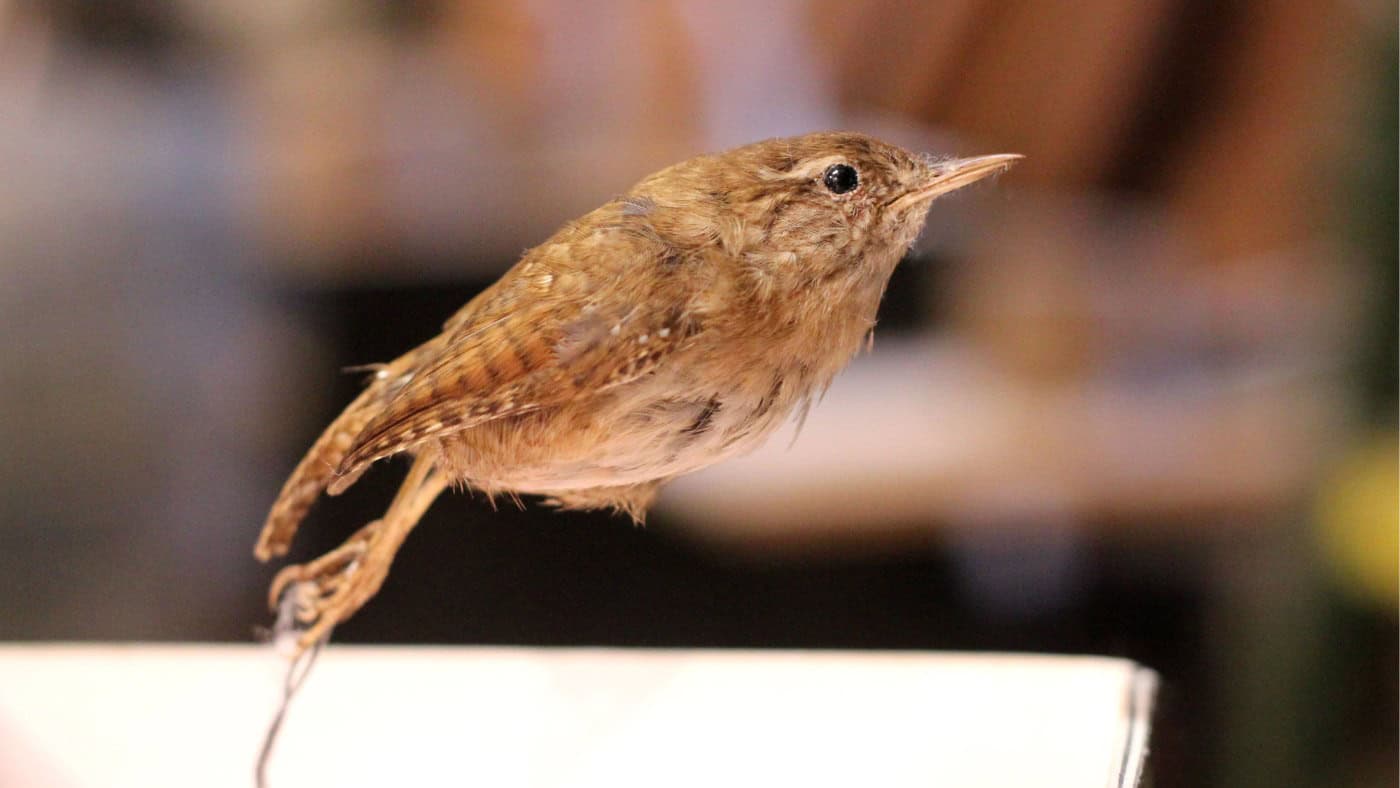
On the Isle of Man, the hunt was first described in the 1720s. George Waldron’s account places it just after midnight as Christmas Day began, but by 1791 it had moved to St. Stephen’s Day. The wren was hung in a “wren bush” of crossed hoops or carried on a pole decorated with holly and ivy, and boys sang the song “Hunt the Wren” from door to door. An 1816 account says the bird’s feathers were prized as luck against shipwreck, especially by fishermen. The same account, by Hannah Ann Bullock, blames a fairy enchantress who drowned the island’s men and escaped as a wren, although the researcher Stephen Miller says the story stems more from her own pen than from oral tradition. By the 1930s the custom was reported to be dying out, though singing around the houses with a wren pole was still taking place in 1975. It gained new life in the Manx cultural revival of the 1970s and 1980s, with a stuffed wren in place of a freshly caught one.
Hela’r Dryw in Wales
In Wales, Hela’r Dryw (hunting the wren) usually took place around Twelfth Night rather than December 26. In Pembrokeshire, the wren was carried in a “wren house,” a small decorated wooden box borne on poles by men who pretended to groan under its weight. National Museum Wales holds a replica made in 1869 by Richard Cobb, sexton of Marloes church, copying one he had made sixty years earlier. The Welsh custom died out by the early twentieth century, although its songs survive.
Where Wren Day Survives Today
Dingle, County Kerry, is the most famous place to see Wren Day. The town has four rival “wrens,” each with its own base and colors: John Street (Sráid Eoin) in blue and white, Goat Street in red and white, the Quay in green and white, and the Green and Gold, based in a Bridge Street pub. Groups in straw suits and masks parade from midday into the night, competing fiercely.
Kerry and west Limerick remain the strongholds elsewhere. Listowel, County Kerry, has hosted an All-Ireland Wren Boys competition, with photographs of competitors there dating to 1967. In west Limerick, groups such as the Carrigkerry Wrenboys and wren boys in Athea still make their rounds. Wren Day events have also been reported in recent years in Miltown Malbay, County Clare, in parts of Cork and Galway, and in Dublin, where the custom was revived on Sandymount Green in 1984.
Why the Wren Is No Longer Killed
The killing of the wren had largely ended by the mid-twentieth century, and the bird itself became legally protected. Under Ireland’s Wildlife Act of 1976, hunting a protected wild bird without a license is an offense. Today the wren is represented by a replica bird, a toy, a carved or straw wren, or simply the decorated holly bush or pole. The rhyme still says the wren was “caught in the furze,” but the catching is now purely symbolic.
Decline and Revival
Through most of the twentieth century, Wren Day weakened across Ireland. Emigration from the 1920s and 1930s drained rural communities of the young men who formed the wren bands. The Catholic clergy often opposed the custom, since the money collected frequently ended up funding drink and dances, and some priests regarded the wren ball as an occasion of sin.
The custom never vanished entirely, and Dingle in particular kept it alive. From the late twentieth century, local groups, folk musicians, and heritage organizations began reviving it elsewhere, often as a fundraiser for charity rather than for a dance. Recognition came in 2021, when Lá an Dreoilín was added to Ireland’s National Inventory of Intangible Cultural Heritage.
Common Questions
One question comes up every December about the name of the day itself.
Is Wren Day the Same as St. Stephen’s Day?
Yes. Both names refer to December 26 in Ireland. St. Stephen’s Day is the church feast, while Wren Day, or Lá an Dreoilín, is the folk name tied to the wren boys’ custom. In Britain, the same date is usually called Boxing Day.
Sources and Further Reading
- Kevin Danaher, The Year in Ireland: Irish Calendar Customs, Mercier Press (1972).
- Elizabeth Atwood Lawrence, Hunting the Wren: Transformation of Bird to Symbol, University of Tennessee Press (1997).
- Sylvie Muller, “The Irish Wren Tales and Ritual: To Pay or Not to Pay the Debt of Nature,” Béaloideas 64/65 (1996/1997), pp. 131 to 169.
- Edward A. Armstrong, The Folklore of Birds, Collins (1958).
- Ronald Hutton, The Stations of the Sun: A History of the Ritual Year in Britain, Oxford University Press (1996).
- John J. Marshall, Popular Rhymes and Sayings of Ireland, Dungannon (1924).
- Christina Hole, British Folk Customs, Hutchinson (1976).
- “The World’s Wrens,” Comhaltas Ceoltóirí Éireann.
- Stephen Miller, Hunt the Wren: The Early Descriptions (1731 to 1845), Chiollagh Books for Culture Vannin (2018).
- “Wren House Used During Twelfth Night Celebrations,” Amgueddfa Cymru – National Museum Wales, People’s Collection Wales.
- Image credit: “Wren Used for Hunt the Wren,” photograph by Manx James (2016), CC0, via Wikimedia Commons.