In Short
Danu is the goddess whose name is usually read inside Tuatha Dé Danann, the divine race of Irish myth. The medieval Irish texts mention her only briefly, as Danann, Donand or Dana. The Book of Invasions makes her a daughter of Delbaeth and mother of three gods, and one version calls her “mother of the gods.” The nourishing mother of modern retellings, though, owes most to Anu in Cormac’s Glossary.
| Name in Medieval Texts | Danann, Donand, Dana and similar spellings |
|---|---|
| Modern Form | Danu, the conventional form used by modern scholars and translators |
| Family in the Book of Invasions | Daughter of Delbaeth; in one genealogy, mother of Brian, Iuchar and Iucharba |
| “Mother of the Gods” | Said of Danann in one version of the Book of Invasions and of Anu in Cormac’s Glossary |
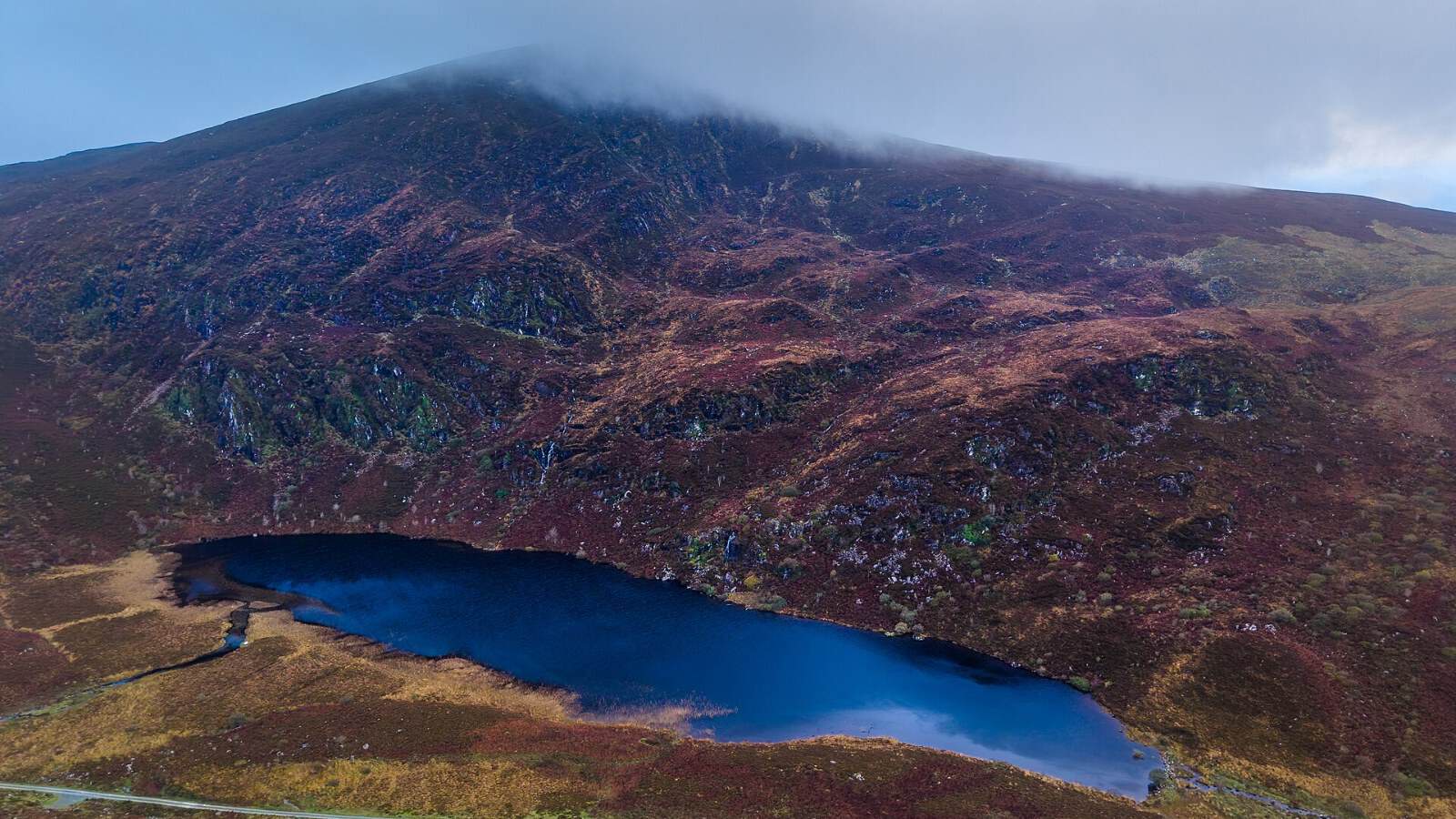
| Landscape | The Paps of Anu (Dá Chích Anann), County Kerry |
| Welsh Parallel | Dôn, parent of Gwydion and Arianrhod |
| Overlapping Figures | Anu, the Morrígan and Brigid |
Ask almost anyone who loves Irish myth to name the mother of the gods, and you will hear one name: Danu. She is pictured as the great source of the Tuatha Dé Danann, a figure of earth, rivers and plenty, standing at the head of every family tree.
Open the medieval manuscripts, though, and she almost disappears. What survives is a scatter of names, a few genealogies, a line of verse and one striking entry in an old glossary. The story of Danu is really two stories, what the early Irish writers recorded and what later readers built from it.
Who Was Danu in Irish Mythology?
In modern telling, Danu is the ancestral goddess of the Tuatha Dé Danann, the divine race of the Mythological Cycle. The Encyclopaedia Britannica, the long-running general reference work, explains the race’s name as the people of the goddess Danu and presents her as an earth mother who was thought to have suckled the gods.
The sources behind that picture are thinner than it suggests. In the medieval Irish passages discussed below, no writer tells a tale about her, gives her a speech or describes her worship. She is known mostly through her name, a place in a family tree and a single title.
The Name Puzzle: Danann, Danand and Danu
Danu is the conventional modern form of the name, used by scholars and translators. The medieval texts themselves have Danann, Donand, Dana and similar spellings. Elizabeth A. Gray, in her entry on the Tuatha Dé Danann for the Encyclopedia of Religion (2005), gives Danu as the name and Danann as its genitive form.
That explains a puzzle in translation. R. A. S. Macalister, who edited and translated the Book of Invasions, writes “the three gods of Danu” in his English. The Irish he was translating reads na tri Dee Dana, and other versions have Danann, Donann or Danand. Danu on the page is the translator’s standard name, not a manuscript spelling.
The full name of the race is also later than many readers assume. Gray suggests it may first have been simply Tuatha Dé, with Danann added later. Mark Williams, a classicist and literary critic trained in Celtic studies, prefers the shorter Túatha Dé in his history of the Irish gods, Ireland’s Immortals (Princeton University Press). The longer form dates only from about the end of the twelfth century.
What the Medieval Irish Sources Actually Say
Two medieval works carry most of the weight. One is a vast pseudo-history of Ireland, and the other is a glossary of difficult words. Neither gives Danu a story, but together they supply nearly every detail later writers used.
Danand in the Book of Invasions
The Lebor Gabála Érenn, or Book of Invasions, is an origin legend of the Irish people that survives in many versions in prose and verse. The Royal Irish Academy, Ireland’s leading body of experts in the sciences and humanities, holds copies in manuscripts such as the Book of Lecan and the Book of Ballymote. The Academy says the tradition’s origins can be traced to the seventh century, but the earliest surviving manuscripts are much later, and the story was reworked extensively in verse in the eleventh and twelfth centuries.
Macalister published his edition in parts with the Irish Texts Society, which issues Irish texts with English translations. In Part IV (1941), the Tuatha Dé section gives her a line of genealogy. “Donann the daughter of the same Delbaeth was mother of the three last, Brian, Iucharba and Iuchar.” The text adds, “These were the three gods of Danu, from whom is named the Mountain of the Three gods.”
One later version adds a title. Its prose says, “That Dana is mother of the gods,” before listing her daughters. It then gives a poem credited to the poet Eochaid ua Floind, who died in 1003 according to the Annals of Ulster, as Macalister notes. The poem names Ériu, Banba, Fotla and other goddesses and ends a stanza with “Danann, mother of the gods,” in Irish Donand, mathair na nDea.
That is close to all she gets. She is a daughter and a mother within a list, honored with a title but never given a scene. The same passage also names “Be Chuille and Danand the two she-husbandmen,” a reminder of how easily similar names multiply in these genealogies. Even the three gods vary, since other passages make them the sons of Bres son of Elada or of Tuirell Bicreo.
Anu, “Mother of the Gods,” in Cormac’s Glossary
The fuller picture of a nourishing mother comes from a different source and a different name. Cormac’s Glossary, known in Irish as Sanas Cormaic, explains difficult Irish words. The Early Irish Glossaries Database at the University of Cambridge notes that it survives in a shorter version of about 700 entries and a longer version of about 1,300.
Whitley Stokes, who edited it in Three Irish Glossaries in 1862, linked it to Cormac son of Cuilennán, whom he called a prince of Cashel. The Dictionary of Irish Biography says he became king of Cashel in 902, was also described as a bishop and is credited with the glossary. Stokes noted that firm proof of Cormac’s authorship was lacking. The glossary is named for him all the same.
In his preface, Stokes summarizes the entry for Ana, also called Anu, as mater deorum hibernensium, “mother of the Irish gods.” He renders the gloss as “well she used to nourish the gods,” and adds that “from whose name are called the Two Paps of Ana, west of Luachair,” in County Kerry.
This is where the nurturing mother of modern retellings really comes from. One version of the Book of Invasions gives Danann the bare title, but only the glossary describes a goddess who feeds the gods. MacCulloch, discussed below, suggested Danu may be akin to Anu, and the combined figure became the Danu most readers know.
Danu, Anu, the Morrígan and Brigid
The medieval writers did not keep their goddesses in neat boxes. Names slide from one figure to another, and the same title can attach to several women. Danu sits at the center of this tangle.
The Morrígan as Anand
The Book of Invasions links Anu to a war goddess. It names “Badb and Macha and Anand, of whom are the Paps of Anu” as daughters of Ernmas, described in the text as a she-farmer. Elsewhere it says Ernmas had three daughters, “Badb and Macha and Morrigu, whose name was Anand,” so the goddesses Badb and Macha appear as her sisters.
So the same text that gives Danand three sons also ties the name Anand to the Morrígan. One later version goes further, making the Morrígan mother of Brian, Iucharba and Iuchair and naming the Paps of Ana “from her additional name ‘Danann.'” Gray notes that both Danu and Anu are treated as personal names of this battle goddess, while allowing that Danu may once have been a separate figure.
Brigid and the Gods of Skill
Cormac’s Glossary also describes Brigit as a female poet and a daughter of the Dagda. J. A. MacCulloch, a clergyman and honorary canon of Cumbrae Cathedral whose 1911 study The Religion of the Ancient Celts includes a chapter on the Tuatha Dé Danann, calls the Dagda an early chief of the gods. He also suggested that Danu was identified with Brigit, perhaps through a folk etymology linking her with dán, Irish for knowledge.
That proposed link to skill would bring Danu close to Brigid, whom the same glossary ties to poetry and whom MacCulloch describes as worshipped by poets. It remains MacCulloch’s suggestion, though. None of the sources discussed here makes Danu a patron of poets or craftsmen in her own right.
Theories About Danu’s Origins
Because the Irish texts say so little, scholars and enthusiasts have looked abroad for relatives. Two comparisons come up most often, one with a Welsh family and one with a great European river. Both remain debated rather than settled.
Welsh Dôn
MacCulloch treated the Welsh Dôn and her children as the equivalents of Danu and her people, and Gray also sets Danu beside Dôn. In the Welsh tale Math the Son of Mathonwy, translated by Lady Charlotte Guest in her English edition of The Mabinogion, Gwydion is “the son of Don.” Arianrhod is “the daughter of Don.”
The tale says little about Dôn directly. Arianrhod is called Math’s “sister’s daughter,” which implies Dôn was Math’s sister. The match in names is suggestive, but it rests on sound and family pattern rather than a shared myth.
The River Danube
Some writers connect Anu, or Danu, with the Danube, seeing in the river’s name a trace of the same goddess. The American Heritage Dictionary of the English Language traces the river’s name to a Proto-Indo-European word, dānu-, meaning river. It also notes that the Romans called the river Dānuvius.
The sound match is real, but the case is fragile. The dictionary’s account of the river’s name says nothing about a goddess, and the Irish texts never connect Danann with any river abroad. It is best treated as an attractive theory.
How Danu Became the Mother Goddess
The mother goddess most readers know took shape largely in modern writing. In effect, she combines Danand’s place in the genealogies and her title in the Book of Invasions with Anu’s nourishing role in Cormac’s Glossary, along with comparisons drawn from other cultures.
MacCulloch, for example, wrote that Danu was called the mother of the whole group of gods and suggested that, as a goddess of plenty, she may have been an early earth mother. He framed this as a possibility. Britannica, by contrast, presents her simply as the earth mother goddess, with the doubt removed.
Lady Gregory gave the idea literary polish. Her Gods and Fighting Men, a retelling of the old tales that she arranged and translated into English, with a preface by the Irish poet W. B. Yeats, names the Tuatha de Danaan as the people of the gods of Dana. She describes Dana as the Mother of the Gods and places her above every other goddess.
Gregory goes further than the medieval lines she echoes. The Book of Invasions gives Danann the title in passing, alongside lists of other goddesses. Gregory raises her to the head of them all and joins her with the nourishing figure the glossary called Anu.
| Topic | Medieval Sources | Modern Retellings |
|---|---|---|
| Name | Danann, Donand, Dana | Danu or Dana |
| Role | Daughter of Delbaeth, mother of three gods | Mother of all the gods |
| “Mother of the Gods” | Said of Danann in one version of the Book of Invasions and of Anu, with a nourishing role, in Cormac’s Glossary | Said of Danu as head of the whole race |
| Myths and Worship | No tale or worship described in the passages discussed here | Earth, fertility and river goddess |
| Welsh and European Links | Not drawn in the passages discussed here | Dôn and the Danube, sometimes stated as fact |
Danu and the Supernatural World
Whatever her origins, Danu’s name is tied to the most important supernatural race in Irish tradition. The Book of Invasions describes the Tuatha Dé in striking terms, “gods were their men of arts, non-gods their husbandmen.” It also credits them with bringing the Great Fal, glossed in the text as the Stone of Knowledge, to Ireland.
According to the Royal Irish Academy’s summary, the Tuatha Dé Danann replaced the Fir Bolg, an earlier wave of settlers in the legend. They were later defeated by Míl Espáine, whose sons Gray describes as the legendary ancestors of the present Irish. Britannica notes that they were thought to have vanished into the hills and survive in Irish lore as fairy folk skilled in magic.
That last idea links Danu’s people to the lore of the aos sí. Gray makes a similar point, connecting their underground dwellings with later folk belief about the fairies.
The Paps of Anu Today
The most tangible trace of this tradition is in the landscape. The Paps of Anu, Dá Chích Anann in Irish, are twin mountains in County Kerry. The Irish name means the Two Paps of Anu. Pap is an old English word for a breast or nipple, and the name fits the shape: two rounded peaks side by side.
The West Pap rises to 690 meters, about 2,264 feet, and the East Pap is slightly higher at 694 meters. A large prehistoric cairn, dating from the Stone Age or Bronze Age, sits on each summit and adds to the likeness.
The mountains carry the name Anu, the form Cormac’s Glossary uses, rather than Danu. Stokes’s preface makes the same link, naming the Two Paps of Ana in County Kerry.
Today Danu remains one of the best-known names in Irish myth. Knowing the difference between the medieval Danand, the glossary’s Anu and the modern Danu does not make her less interesting. It shows how a goddess can grow from a few lines of text into a figure that still shapes how people imagine the Irish gods.
Common Questions
Danu raises the same few questions again and again. Here are short answers based on the medieval texts and the scholarship discussed above.
Is Danu the Same as Anu?
Possibly. Many modern references treat them as one goddess; the Encyclopaedia Britannica, for example, gives Anu as another name for Danu. The medieval sources overlap but don’t settle it. Anu is the nourishing mother of the Irish gods in Cormac’s Glossary, while Danand appears in the Book of Invasions as the mother of three gods. MacCulloch suggested the two may be related, and Gray notes that both names are attached to the Morrígan. One later version comes closest, naming the Paps of Ana from the Morrígan’s other name, Danann.
Does Any Medieval Text Call Danu the Mother of the Gods?
Yes, though under the forms Dana and Danann. One version of the Book of Invasions calls her “mother of the gods” in prose and again in a poem, but no medieval text tells her story. The fuller title mater deorum hibernensium, with its nourishing role, belongs to Anu in Cormac’s Glossary.
What Does Tuatha Dé Danann Mean?
It is usually translated as the People of the Goddess Danu. The race may first have been called simply the Túatha Dé, and the longer form with Danann dates from around the end of the twelfth century.
Who Were the Three Gods of Danu?
In Macalister’s translation of the Book of Invasions, they are Brian, Iuchar and Iucharba, the sons of Donann, daughter of Delbaeth. The text says a mountain was named after them. Other passages give different genealogies, naming the three sons of Bres son of Elada, Triall, Brian and Cet, or the sons of Tuirell Bicreo, a name some versions give to Delbaeth.
Sources and Further Reading
These are the sources opened and read for this article. They are grouped by publisher, with the primary texts first.
- Internet Archive: Lebor Gabála Érenn, Part IV, ed. and trans. R. A. S. Macalister (Irish Texts Society, 1941) · Three Irish Glossaries, ed. Whitley Stokes (1862)
- Project Gutenberg: The Mabinogion, trans. Lady Charlotte Guest · Gods and Fighting Men, by Lady Gregory · The Religion of the Ancient Celts, by J. A. MacCulloch (1911)
- University of Cambridge: Early Irish Glossaries Database, Texts
- Royal Irish Academy: Leabhar Gabhála / The Book of the Invasions · Cormac, by Aidan Breen (Dictionary of Irish Biography)
- Encyclopedia.com: Tuatha Dé Danann, by Elizabeth A. Gray (Encyclopedia of Religion, 2005)
- History Ireland: Ireland’s Immortals: A History of the Gods of Irish Myth, reviewed by Angela Bourke
- Encyclopaedia Britannica: Danu · Tuatha Dé Danann · William Butler Yeats
- American Heritage Dictionary: Danube
- MountainViews: The Paps East
- The Irish Times: Top of the Paps, by Tony Doherty (2009)
- Merriam-Webster: Pap
- University of Michigan: Pappe (Middle English Dictionary)
- Sliabh Luachra: The Paps of Anú
Image credit: Lough Glannafreaghaun (Shrone Lake) below the cliffs of Paps East, County Kerry, photograph by Podstawko (2025), CC0 public domain dedication, via Wikimedia Commons.