In Short
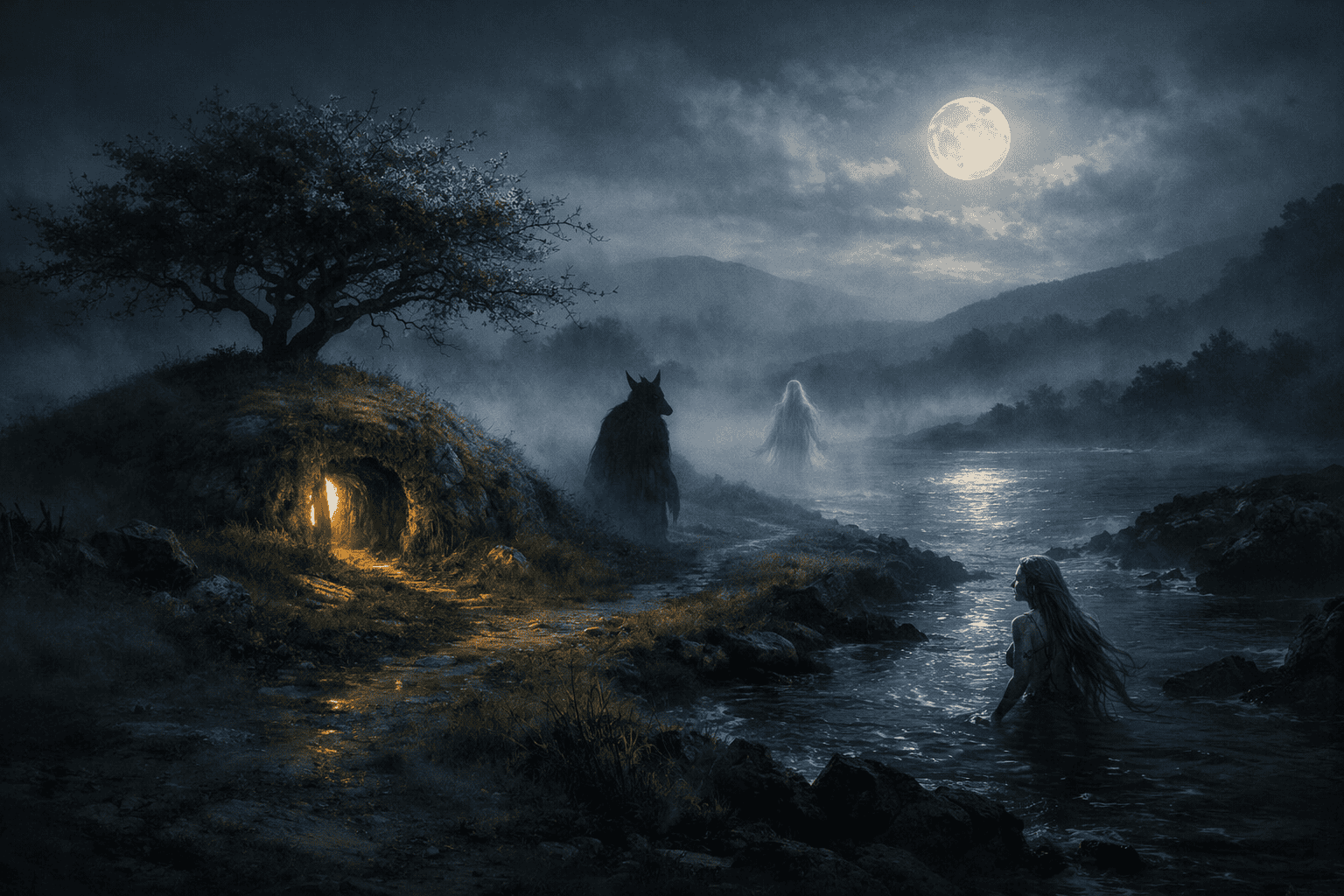
Irish mythical creatures fall into a handful of groups: the fairy folk or Aos Sí (pronounced ees shee), who are the old gods withdrawn into the mounds; the solitary spirits who work alone, such as the banshee and the púca; the water beings; and the hungry or restless dead. Most are not monsters in the usual sense, but neighbors with rules attached.
| Two broad kinds | The trooping fairy host, and the solitary spirits |
|---|---|
| Where they live | Mounds, forts, lone thorns, lakes, the sea, lonely roads |
| Death omens | The banshee, the Dullahan, the bean nighe |
| Shapeshifters | The púca, the each-uisce, the selkie |
| Water beings | The merrow, the selkie, the each-uisce |
| The restless dead | The Sluagh, the Abhartach, the Fear Gorta |
| Usual rule | Do not disturb their ground, accept their food or thank them directly |
| Best sources | Lady Wilde, Yeats, Hyde, and the Schools’ Collection |
How Irish Creatures Are Organized
Lists of Irish mythical creatures usually run alphabetically, which hides the structure. The tradition itself sorts them differently, and the sorting tells you how people behaved around them.
The first division is between the fairy host, who move in numbers and belong to a place, and the solitary spirits, who work alone and usually have one specific job: to warn, to mislead, to drown, to steal a child. The second division is between beings you might meet by accident and beings that come to you. The banshee is not encountered. She arrives.
Most of these beings descend, directly or loosely, from the Tuatha Dé Danann, the old gods who withdrew underground when the Gaels took Ireland. That is the hinge that turns mythology into folklore, and it is why the fairy folk are owed respect rather than simply feared.
The Fairy Folk
The Aos Sí are the people of the mounds, and they are the center of the whole system. They are not small, not winged and not charming. In the accounts they are tall, well dressed, easily insulted and entirely capable of taking a child, a cow or a person’s wits.
They are also not straightforwardly evil, which is the point most modern retellings miss. The question of whether Irish fairies are good or evil has a clear traditional answer: neither, in the way that weather is neither. They respond to how they are treated.
The types of Irish fairies break down further into the trooping host, seen moving between forts at certain times of year, and the solitary figures below. For the general picture, start with the Irish fairies guide.
The Death Omens
A distinct group exists only to announce a death, and these are the most consistently reported beings in Irish tradition.
The Banshee
The banshee, from bean sí meaning woman of the mounds, keens outside a house before a death. She attaches to particular families rather than to places, and in the older accounts she is heard far more often than she is seen. The cry itself is described with unusual consistency across counties, and the origins of the legend run back through the professional keening women who cried at Irish funerals.
The Dullahan
The Dullahan rides at night carrying his own head, stops at a house, and calls a name. Unlike the banshee he does not warn. He collects. What happens if you see the Dullahan is a question with a fairly grim traditional answer.
The Bean Nighe
The bean nighe washes the clothes of those about to die. She belongs primarily to Scottish Gaelic tradition, where the name is recorded; Irish tradition has a washer at the ford too, but the figure there usually shades into the banshee rather than standing apart from her.
The banshee does not cause the death. She is the sound the death makes on its way.
The distinction drawn in most collected accounts
The Shapeshifters and Tricksters
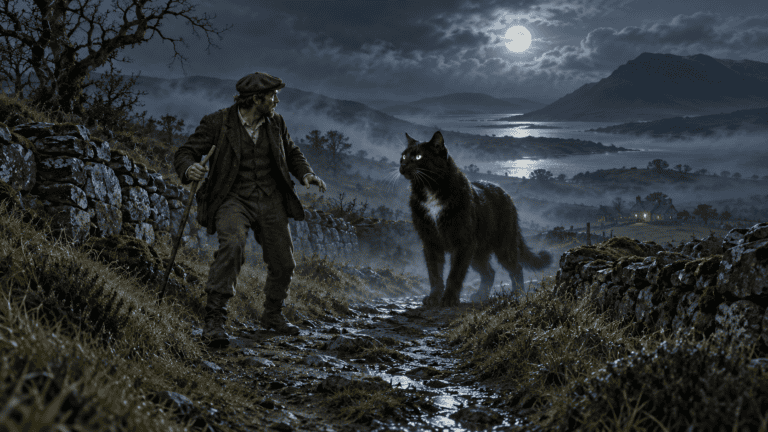
The púca is the best known. He appears most often as a black horse with yellow eyes, offers or forces a ride, and carries the rider across country before dumping him in a ditch at dawn. Whether the púca can change form at will is one of the more consistent claims about him, and the collected encounters follow a recognizable pattern.
The Far Darrig, the red man, works differently. His trade is unpleasant practical jokes, and the tradition treats him as something to be endured rather than escaped.
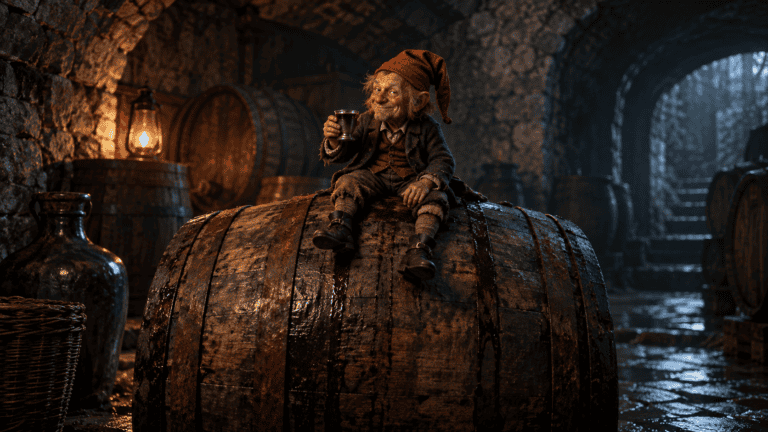
The leprechaun belongs here too, as a solitary fairy shoemaker with a hoard, not as a national emblem. His promotion from minor figure to mascot happened in the last hundred and fifty years, largely outside Ireland.
The Water Beings
Ireland’s water spirits are a distinct family, and coastal communities kept them clearly separate from the land fairies.
The merrow, from murúch, is the Irish mermaid, and the stories turn on her cap or cloak: take it and she must stay, find it again and she returns to the sea without hesitation. The selkie follows the same pattern in sealskin, though selkie tradition is strongest in Orkney, Shetland and the Scottish islands, with Irish versions concentrated along the north and west coasts.
The each-uisce, the water horse, is the dangerous one. It offers a ride in the same manner as the púca, then takes the rider into deep water. The guide to Irish water spirits covers the group in full.
The Hungry and the Restless Dead
A fourth group has nothing to do with fairies. These are the dead who did not settle.
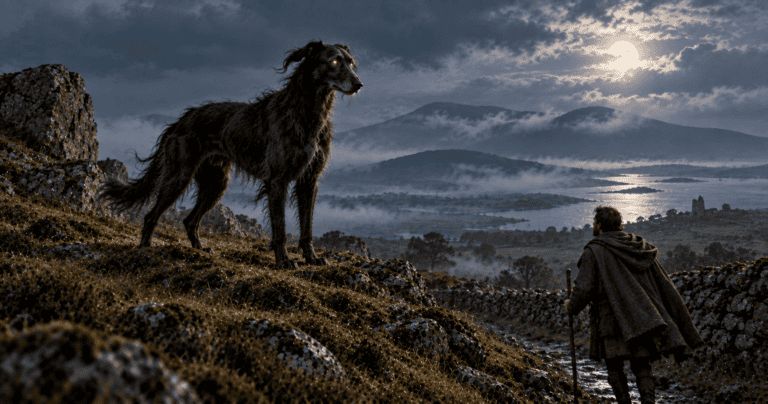
The Sluagh are the host of the unforgiven dead, traveling in the air, described as coming from the west and best kept out by shutting the western window. The Abhartach is a chieftain from County Derry who returned from the grave demanding blood and had to be buried head downward with a stone on top, an account recorded by Patrick Weston Joyce in The Origin and History of Irish Names of Places (1875). The claim that he influenced Bram Stoker’s Dracula is a modern one, argued by Bob Curran in the 2000s, and rests on no evidence from Stoker himself. The Fear Gorta, the man of hunger, appears as a starving figure begging on the road and rewards those who give.
The Fear Gorta is usually read as folklore carrying the memory of famine, and the belief in hungry grass sits alongside him. How far the figure predates the Great Hunger is not settled.
The Changeling
The changeling belief deserves separate treatment because it did real harm. A child who failed to thrive, or an adult whose behavior changed, could be declared a fairy substitute, and the prescribed remedies ranged from cruel to lethal. The 1895 killing of Bridget Cleary in Tipperary is the case usually cited, and it is a useful corrective to any reading of Irish folklore as harmless color.
What to Be Careful With
Three things circulate widely and are not traditional.
The idea of fairies as tiny winged creatures is English and Victorian, not Irish. The leanan sí as a vampiric muse owes most of its familiar shape to Lady Wilde in 1887 and Yeats in 1888 rather than to older tradition. And a good deal of what is sold as Irish creature lore online is Scottish, Welsh or invented outright, then relabelled Celtic.
The test is simple enough: ask who recorded it, when, and from whom. Where this site cannot answer that, it says so.
Where to Start
For the system as a whole, read the Aos Sí. For the single most searched figure, the banshee. For the one with the best stories, the púca. And for the ground these beings are said to hold, the fairy forts.
Sources and Further Reading
- Lady Wilde, Ancient Legends, Mystic Charms and Superstitions of Ireland (1887).
- W. B. Yeats (ed.), Fairy and Folk Tales of the Irish Peasantry (1888).
- Patrick Weston Joyce, The Origin and History of Irish Names of Places, second series (1875).
- The Schools’ Collection, National Folklore Collection, University College Dublin (1937 to 1939), on dúchas.ie.
- Angela Bourke, The Burning of Bridget Cleary: A True Story, Pimlico (1999).
- Alexander Carmichael, Carmina Gadelica (1900), for the Scottish Gaelic parallels.